
Macon County Court Records After a Jail Arrest
An arrest in Macon County puts a person into the jail, but it does not by itself create a court case. The court record begins when the State's Attorney decides to charge and files a charging document. From that point the case carries its own number, its own hearings, and its own outcome. The jail roster may show a docket number, a court date, and a courtroom, and those clues bridge straight into the court system. Sample profiles have shown docket numbers like 26-CF-333 and courtroom codes such as CR 1.
Keep the two sides separate as you search. The booking and arrest side, with custody status and mugshots, lives on the jail inmate records page and the jail mugshots page. The court record is the charge the prosecutor actually filed and how the case moved through the courthouse. Both use the word arrest, but only one is the official court file.
How to Find Macon County Court Records After an Arrest
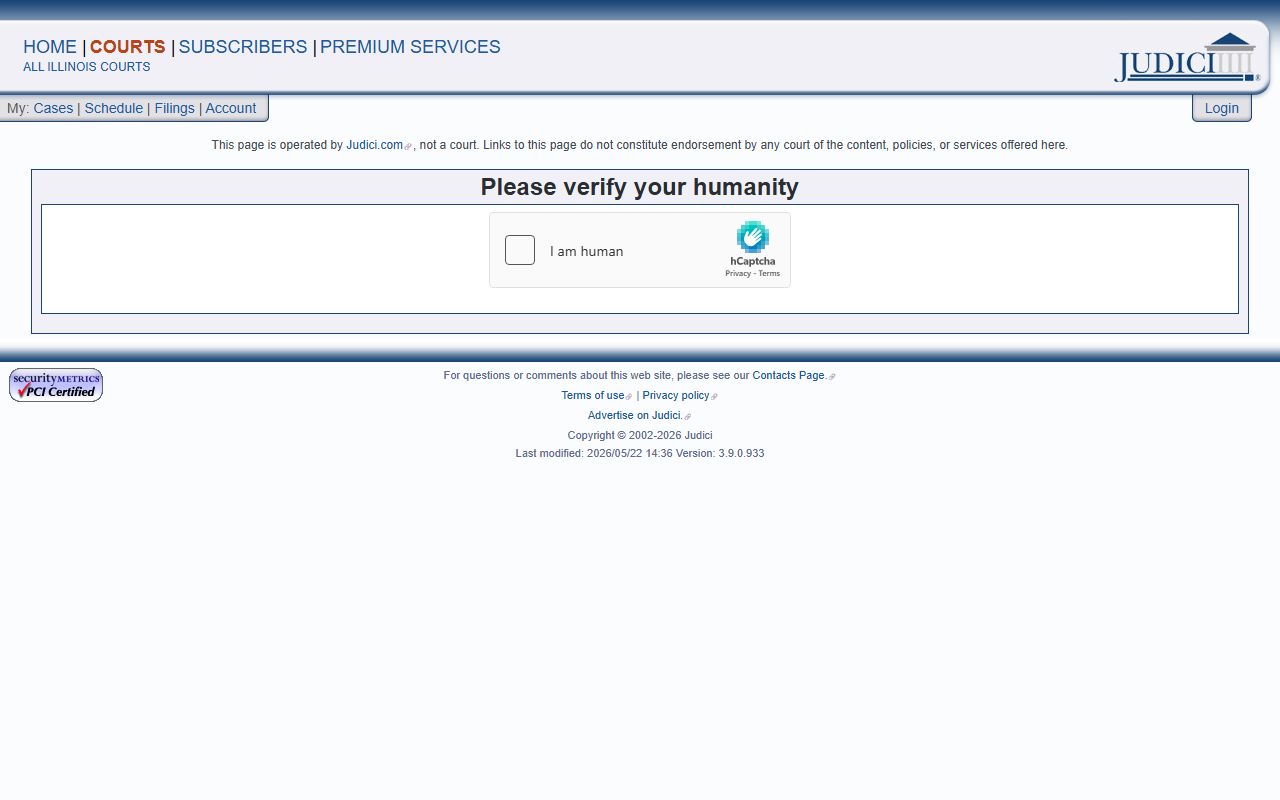
Macon County criminal cases are searchable online through Judici, the court-record vendor for many Illinois counties. The case-search screen sits behind a verification step, so plan to clear a captcha before the form opens. The jail roster gives you the docket number to search, which makes the lookup faster.
- Note the docket number from the jail profile, or have the defendant's name ready.
- Open the Macon County Judici case search and complete the captcha.
- Search by case number when you have it, or by defendant name when you do not.
- Open the case and read the filed charges, their class, and current status.
The Judici access gate that appears before the search form is shown below.
For older files, certified copies, or cases that are not online, the Macon County Circuit Clerk keeps the criminal, civil, and traffic case records. Statewide criminal-history checks through the Illinois State Police are a separate process and may require fees or fingerprints depending on the purpose.
How Charges Get Filed After an Arrest: Complaint, Information, and Indictment
The court record opens with a charging document. After booking at the jail, the prosecutor reviews the arrest and chooses how to charge. Illinois uses three main charging documents, and which one appears depends on the seriousness of the offense and the stage of the case.
| Complaint | Information | Indictment | |
|---|---|---|---|
| Filed By | Officer / Prosecutor | Prosecutor | Grand Jury |
| Common For | Misdemeanors | Many felonies | Serious felonies |
| Starts | The case | The case | The case |
The Macon County State's Attorney, currently Diane Couri, files and prosecutes these charges. The office can amend, reduce, add, or drop counts as the case develops, which is exactly why the court file can differ from the original booking charge.
The prosecutor's office also runs programs that can change how a case ends, including an adult diversion program and a deferred prosecution program, along with units for domestic violence and victim-witness support. Minor traffic matters even have walk-in hours, though the office is clear that any criminal misdemeanor, felony, or DUI case must move through court. The State's Attorney homepage, with the office mission and contact block, is shown below.

For the full office contact details and program list, the Macon County State's Attorney site is the official source, while the court file itself shows what was charged in a specific case.
Charge Status and What It Means
Charges are not fixed once they are filed. As a case moves, a charge can be amended, reduced, added, or dismissed. Booking charges on the jail roster also can differ from the charges the prosecutor finally files. Older sample bookings showed dispositions such as probation, charge dismissed, and nolle prosequi. The table defines the status terms a court record commonly uses.
| Status | What It Means |
|---|---|
| Pending | The charge is filed and the case is still moving through the court. |
| Amended / Reduced | The prosecutor changed the charge, often to a lesser offense. |
| Dismissed | The charge was dropped and is no longer being pursued. |
| Nolle Prosequi | A formal decision by the prosecutor to decline or abandon the charge. |
Note: A docket number on the jail roster, such as one starting with CF for a felony, is the key that lets you leave the booking record and pull the matching court case.
Bond and Release After an Arrest
Illinois changed how release works under the Pretrial Fairness Act, so the old picture of always posting cash bail no longer fits. Article 110 of the Code of Criminal Procedure now guides pretrial release, and a judge decides custody at a first appearance. The roster still carries bond and bail fields, and an older booking once showed a "10% Cash" bond of $1,000, but many current records read $0.00 while a judge weighs release conditions.
| Bond Type | How It Works |
|---|---|
| Cash Bond | Money deposited with the court or jail; older records may show a 10% cash amount. |
| Surety Bond | A bond backed by a third party; commercial bail is limited in Illinois. |
| PR / Own Recognizance | Release on a written promise and conditions, without a cash deposit. |
| No-Bond Hold | Custody continues because a judge orders detention or another agency placed a hold. |
For practical release questions, the jail Corrections line at (217) 424-1341 can confirm custody, while the court file shows the judge's actual order. A reader should not treat an old cash-bond field as the current rule.
Warrants That Lead to an Arrest
Many arrests begin with a warrant. A court or agency issues an arrest, bench, or fugitive warrant, police take the person into custody or the person surrenders, and the jail books them. The booking then appears on the inmate inquiry with charges, a docket number, and a court date. No public active-warrant search was found in the Macon County Sheriff navigation reviewed, so the build does not point to a warrant portal that may not exist.
To check on a warrant tied to a court case, the Judici case search may show court dates and failures to appear after the captcha step. The Circuit Clerk or court counter is the better fallback for bench warrants, and the sheriff's main office at (217) 424-1321 handles agency questions. A person who believes they have a warrant should consider speaking with an attorney rather than risking a surprise walk-in.
Charges vs. Convictions
Being arrested and charged is not the same as being convicted. A charge is an accusation that opens the court case. A conviction is the result, reached by a plea or a verdict. Both are public records, but they sit at very different points in the process, and reading one as the other is a common mistake.
| Charge | Conviction | |
|---|---|---|
| Stage | Accusation | Verdict or plea |
| Burden of Proof | Probable cause | Beyond reasonable doubt |
| Public Record | Yes | Yes |
Sealed vs. Expunged Arrest Records
After a dismissal or an eligible outcome, Illinois law offers two routes to clear a record. Sealing hides a record from most public view, while expungement erases it. The Criminal Identification Act sets the framework and the eligibility rules, and the process runs through the court, not the jail roster.
| Sealed | Expunged | |
|---|---|---|
| Visibility | Hidden from public | Destroyed or treated as never existed |
| Law Enforcement | Limited access | Very limited |
| Eligibility | Set by 20 ILCS 2630 and case outcome | Often for arrests without conviction, per 20 ILCS 2630 |
The governing law is the Illinois Criminal Identification Act, 20 ILCS 2630. Eligibility depends on the charge and the disposition, so the court or a legal-aid office is the right place to confirm whether a record qualifies.
Background Check Considerations
A casual name search is not a background check. A formal background check that decides employment, housing, or credit is regulated by the federal Fair Credit Reporting Act and must run through a compliant agency. Court records are public, but using them for those decisions carries legal duties that a quick lookup does not meet.
Important: This site is not a consumer reporting agency under the FCRA, and nothing here may be used for employment, tenant, credit, or insurance screening.
Restricted Court Records After an Arrest in Macon County
Not every record after an arrest is open. Juvenile cases are confidential, sealed and expunged matters drop out of public view, and some dismissed charges are withheld. Records tied to an active investigation can be exempt as well. Illinois FOIA supports access to non-exempt records, but it does not override those protections.
The arrest-information rules sit in 5 ILCS 140/2.15, and pretrial release is governed by Article 110 of the Code of Criminal Procedure. For a certified copy or a file that is not online, the Macon County Circuit Clerk, shown below, is the office that holds the case record.
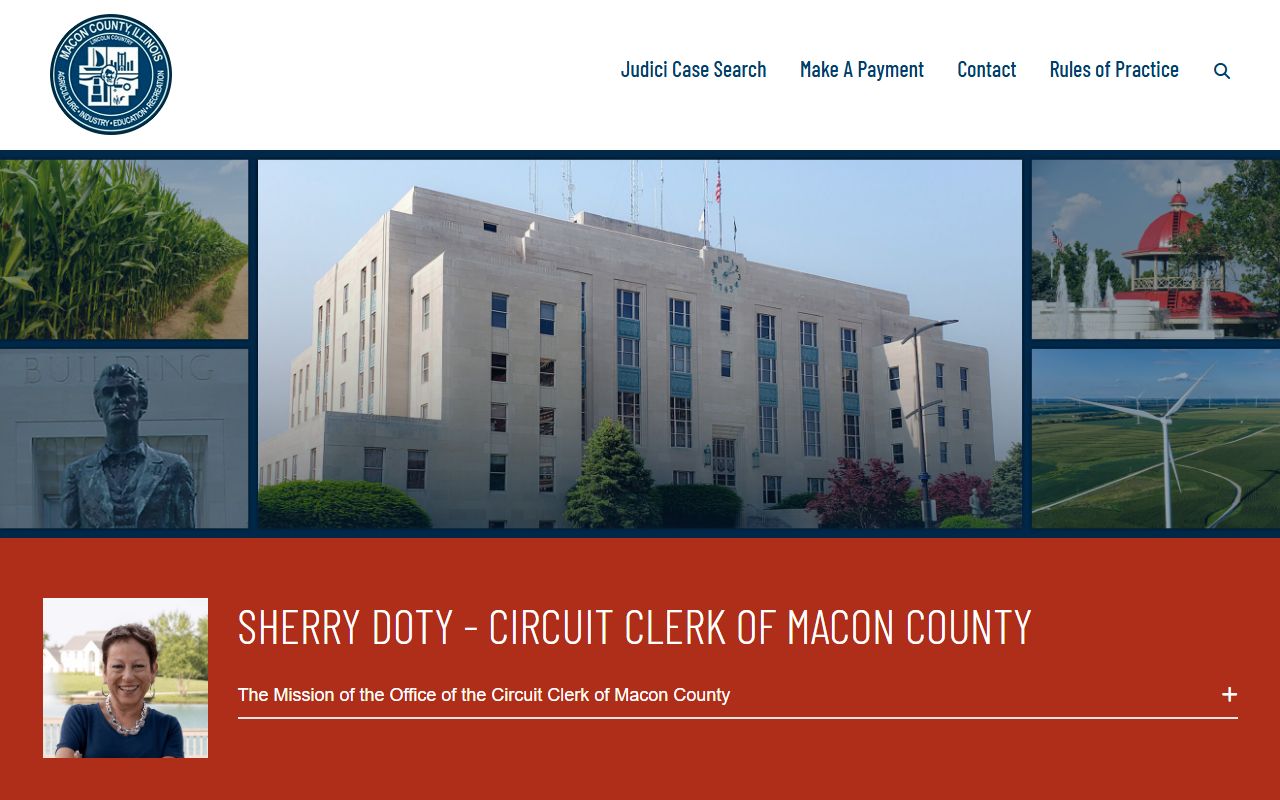
The clerk maintains the traffic, civil, and criminal case records filed and heard in Macon County, which makes it the formal source when the online docket falls short.